Rubber extrusions have been made used in numerous products for industrial, commercial and consumer purposes. Rubber offers many beneficial qualities including resilience, flexibility and impermeability. Depending on the qualities of the rubber stock used and the exact process it goes through, the finished rubber product can vary. All forms of rubber have their own unique properties, and certain properties are better for certain purposes. Natural rubber offers abrasion and acid resistance, while various synthetic rubbers, like silicone and viton, are able to provide heat and chemical resistance as well as weather resistance. Properties that can vary include tensile strength, hardness, aging, flexibility, permeability and speed of recovery from deflection.
One method used in the creation of rubber products is the extrusion process. In this method the raw rubber material is processed through an extruding machine. The extruder is composed of a heated shearing screw conveyor and a die. Once the material is fed into the conveyor by a hopper, the shearing screw rotates, pushing the material and heating it. This process will continue until the material is pushed out of the conveyor through the die which will form the material into its intended shape.
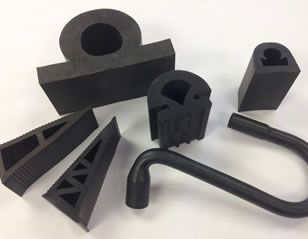 Rubber Extrusions
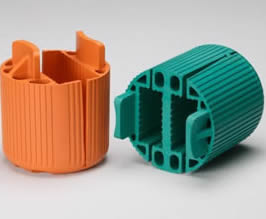 Rubber Molding
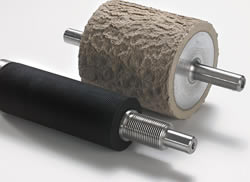 Rubber Rolls
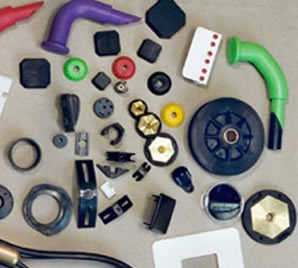 Rubber to Metal Bonding
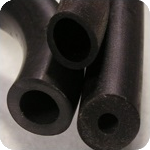 Rubber Tubing
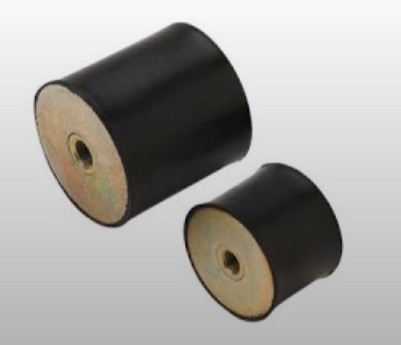 Vibration Absorbers
 Castings & Forgings
 Bulk Material Handling
 Electrical & Electronic Components
 Flow Instrumentation
 Hardware
 Material Handling Equipment
 Metal Cutting Services
 Metal Forming Services
 Metal Suppliers
 Motion Control Products
 Plant & Facility Equipment
 Plant & Facility Supplies
 Plastic Molding Processes
 Pumps & Valves
 Recycling Equipment
 Rubber Products & Services